How the car rides is information
Steering and suspension keep the tires pressed to the road and pointed where you want to go. Their parts wear slowly, so the changes creep up and a driver gets used to them without noticing.
You cannot inspect most of these parts without lifting the car, but you can notice how it behaves. This page lists the signs worth paying attention to and the quick checks that need nothing but a parked car and a few minutes.

Quick checks from the driver’s seat
- Whether the car drifts on a straight, level road
- Whether the steering wheel sits straight
- How the car settles after a bump
- Any knocks or clunks over rough ground
What to notice
Pulling or drifting
On a straight, level road with light hands on the wheel, the car should hold its line. A steady pull to one side can come from tire pressure, alignment or worn parts.
Bouncing
Push down hard on one corner of the parked car and let go. It should rise and settle; if it keeps bouncing, mention it to a technician.
Noises
A knock over bumps, a clunk when turning sharply or a groan at low speed are all worth describing to a shop, with a note of when they happen.
Uneven tire wear
Tires worn on one edge are often the first visible sign of an alignment that has shifted, sometimes after a single pothole.
Have it checked when
- The steering feels loose or has play in it
- The car wanders and needs constant correction
- You hit a large pothole or curb hard
- A knock or clunk keeps coming back
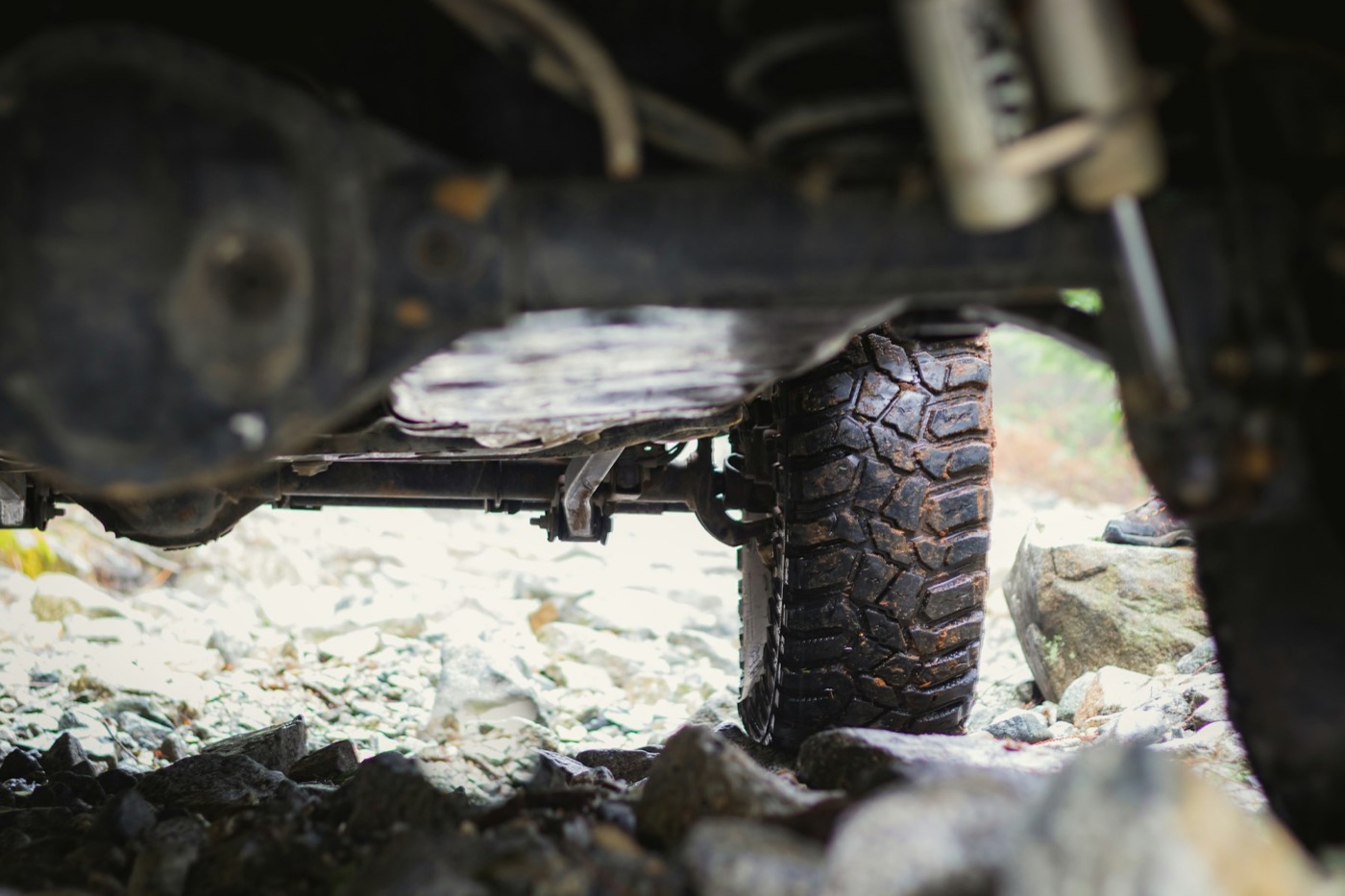
Write down when a noise happens: turning left or right, over bumps, when cold, at a particular speed. A technician can find a problem far faster with that description, and it saves guessing on both sides. Some shops will take a short drive with you to hear it.
Common questions
A wheel that sits crooked while the car goes straight often means the alignment has shifted. A shop can measure and adjust it.
A hard hit can knock the wheels out of alignment or damage a tire or suspension part. If the car feels different afterward, have it looked at.
Press down firmly on one corner of the parked car and release. The body should come back up and stop. Repeated bouncing can mean the shock absorbers or struts are worn.
If steering suddenly feels much heavier than usual, especially at low speed, it is worth having checked soon, along with any warning light that came on.
This page is general information, not an inspection or a diagnosis of your car. Follow your owner’s manual and ask a qualified technician about anything you find.